
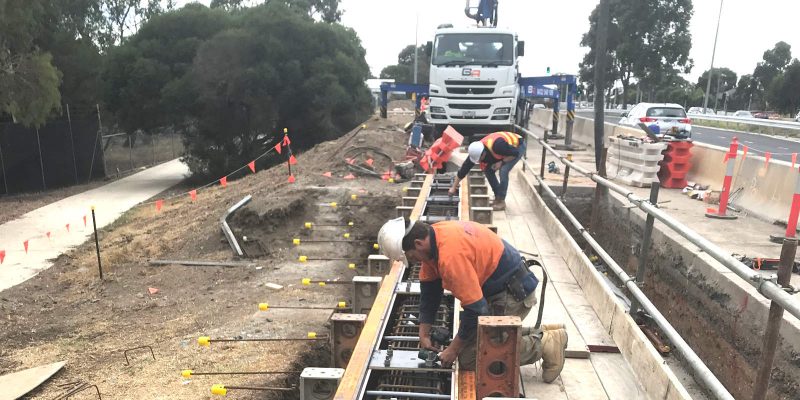
All concrete structures require concrete formwork. Good excavation and formwork are the foundation of creating concrete structures. So what makes the difference between good formwork and not so good formwork.
In this article we are trying to clarify the difference. First lets answer the question – what is Formwork?
Concrete formwork is the frame or mould that holds wet concrete in place while it sets (or cures). There are two main types of formwork – temporary and permanent. Temporary formwork is a reusable formwork that’s removed from around the concrete once it has set.
We have listed below some of the characteristics of great Formwork there may be more but these are the ones we strive to achieve every time we build a structure.
- It must be capable to withstand all types of dead and live.
- It is practically good to have water proof character, so that it won’t absorb water from concrete.
- Entire formwork should be rigidly constructed and propped, so that there should be no deformation in the shape and retain its original shape.
- Deflection and shrinkage should be minimum.
- The joins should be tight enough to minimize the leakage of cement grout.
- The formwork should be constructed with different segments. So that while removing the formwork it should not damage the concrete
- The material of the formwork should be cheap, easily available and should be suitable for reuse.
- The formwork should be set accurately to the desired line and levels should have plane surface.
- It should be as light as possible. So that it is easy to transfer and erect.
- The material of the formwork should not warp or get distorted when exposed to the elements.